ResearchDiscoverLearnExplore
CoastwatchSubscribe![]() Don't miss the latest issue of Coastwatch magazine
|
Research details
Back To Research ListingRed Porgy (Pagrus pagrus): Evaluation of a New Candidate Species for Intensive Mariculture in North CarolinaDownload Full ReportPrincipal Investigator Name: Frank Montgomery, Wade Watanabe, James Morris Jr. Project #: 06-AM-02 Funding Period Begin: 12/01/2006 End: 11/30/2007 Region: Southern Primary Category: Aquaculture & Marine State Funding: $25976.00 Summary:
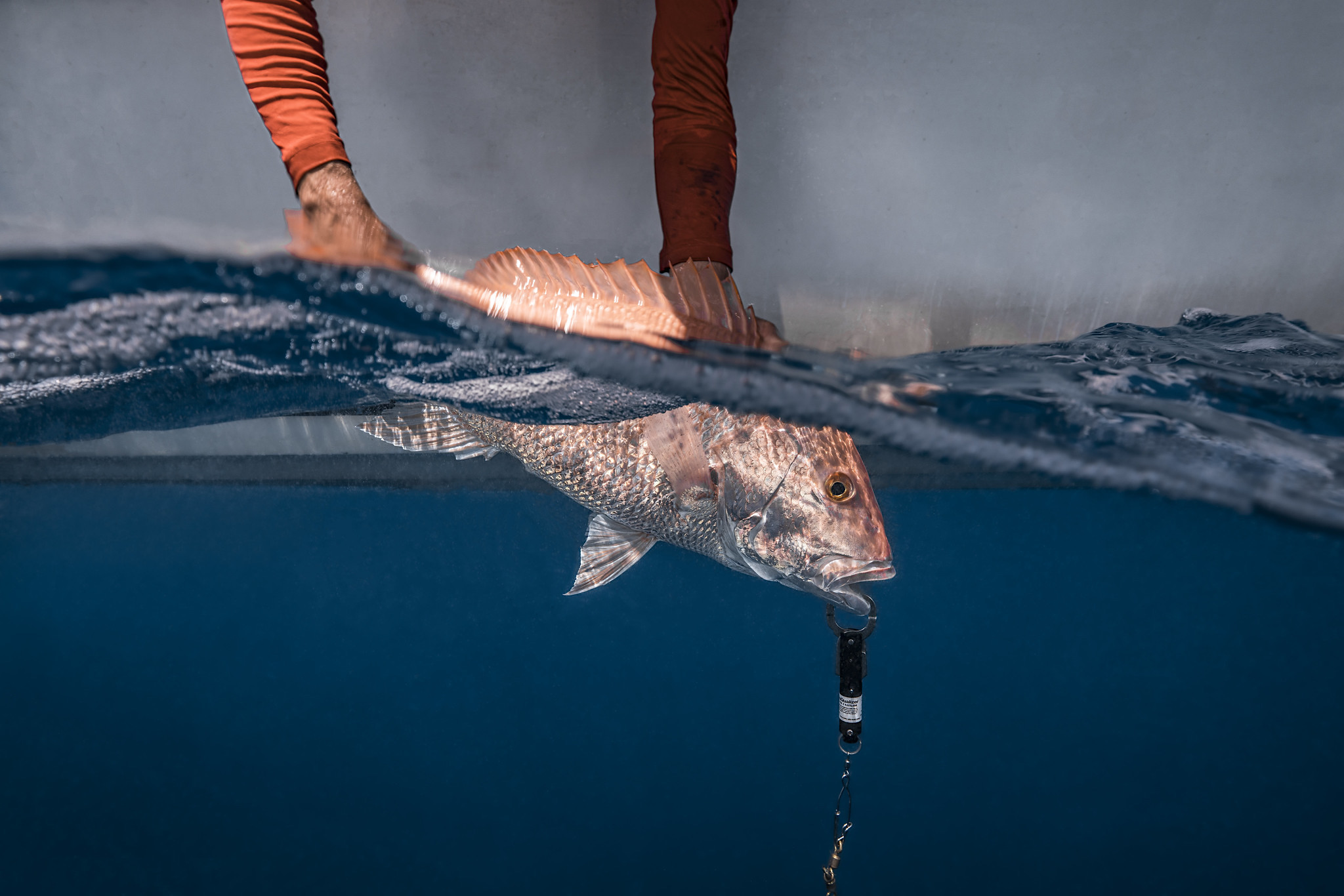
To feed the public demand for seafood and conserve wild populations, researchers are constantly testing new fish species for aquaculture production. One species under consideration is the red porgy (Pagrus pagrus), a locally found fish also known as sea bream, silver snapper or pink porgy. Weighing up to 17 pounds, red porgy are a prized but overfished seafood species. Its close relative in Asia, the red sea bream (Pagrus major), is one of the most widely cultivated marine finfish in the world. Naturally, the red porgy should come under consideration as a candidate aquaculture species. So Wilmington local Frank Montgomery worked together with scientists from University of North Carolina Wilmington and a National Oceanic and Atmospheric Administration laboratory in Beaufort to assess whether this marine finfish could be reliably cultured in tanks. This study is the first account of red porgy aquaculture in North America. Enclosed tanks might be a big switch for red porgy, which in nature are found in 60 to 800 feet of ocean. This study focused on determining which tank conditions are best for hatching and raising the tiny red porgy larvae, and monitoring how the larvae matured and grew. The study reports on the water salinity and temperature parameters tested, tracking measures such as larval growth, survival and osmoregulatory ability — a measure of how well a fish is able to balance its internal chemistry with the chemistry of its environment, mainly changes in water salinity.
As for rearing the porgy larvae, about 2.5 percent of the 37,500 hatched lived past the one-month mark — not high for commercial standards, but a notable start for a new mariculture species. The surviving fish averaged 7.5 inches and 0.35 pounds after 11 months. Overall, this is a foundational study that successfully spawned and reared red porgy, discovered basic husbandry needs and paves the way for more efficient red porgy aquaculture in the future.
Impact The research resulted in one master's degree thesis completed at UNCW. The project data has been presented at sessions of the North Carolina Aquaculture Development Conferences and the U.S. and World Aquaculture Society Conferences, and published in the North American Journal of Aquaculture. Red porgy projects will also continue at the Marine Aquaculture Research Center in Carteret County and at the UNCW Center for Marine Science. Did You Know? The sheepshead, a boldly striped, buck-toothed sportsfish regularly encountered in North Carolina, is another member of the porgy family, Sparidae.
North Carolina Sea Grant: Your link to research and resources for a healthier coast
|